‹ Back to all stories
Ardit Berisha as CTO
Amaro Than Team · Nov 24, 2025
Ardit Berisha is the CTO of Amaro Than and the engineer behind everything you don’t see but always feel: speed, safety, and reliability. He lives in the intersection of full-stack engineering, cybersecurity, network design, and cloud architecture—and he treats Amaro Than not as a simple product, but as a living, evolving system that must stay fast and secure even when millions of people are using it at the same time.
From the beginning, Ardit approached Amaro Than with one hard rule: **it must scale, and it must be safe**. No shortcuts, no “we’ll secure it later.” Every feature, from login to media streaming, is designed as if it will be attacked, overloaded, and stress-tested in the real world. He thinks like a hacker and builds like an architect, combining offensive knowledge with defensive design.
As a full-stack engineer, Ardit moves comfortably between backend code, frontend logic, databases, and deployment pipelines. He writes APIs, optimizes SQL queries, designs data models, and then switches to the user-facing layer to make sure everything feels smooth and responsive. For him, performance is a user-experience feature: if the feed loads slowly, if messages lag, if uploads time out, trust is lost. So he builds systems where the backend and frontend are engineered to respect the user’s time.
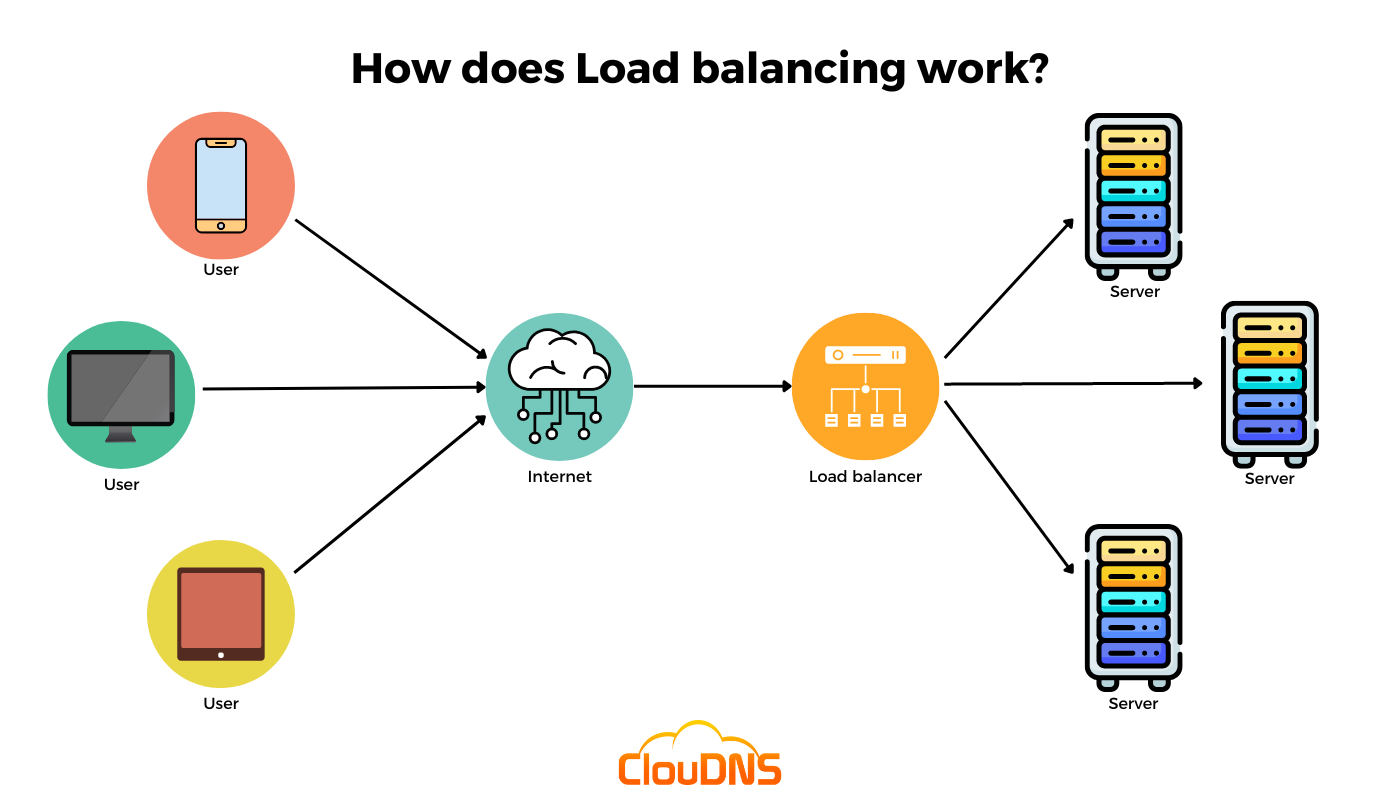
On the infrastructure side, Ardit designs **distributed, horizontally scalable architectures**. Instead of one giant server doing everything, Amaro Than is built as a collection of services that can be scaled independently. Authentication, feeds, uploads, notifications, search—each can run on its own set of nodes, behind load balancers, and with separate scaling rules. When traffic spikes in one area, the whole platform doesn’t collapse; only the relevant services scale up.
He carefully separates read and write workloads in the database layer. Primary databases handle critical writes—likes, posts, messages—while read replicas offload queries that power feeds and public content. Indexes are tuned, queries are profiled, and data is partitioned so that even with millions of records, operations stay predictable and fast. Ardit’s goal is simple: **O(1) feeling for the user, even if the system does millions of operations underneath.**
Media is one of the heaviest parts of any social platform, and Ardit treats it like its own universe. He combines efficient storage strategies with CDNs and caching to make sure photos and videos feel instant. Files are optimized, transcoded where needed, and served from locations close to the user. Instead of sending every request back to the main server, static assets and media are pushed to the edge, reducing latency and server load.
As a network engineer, he thinks about every hop a packet takes. Routing, TLS termination, reverse proxies, and firewall rules are not abstract concepts—they are tools to control performance and reduce attack surface. He minimizes unnecessary round trips, compresses responses, and leverages HTTP/2 and modern web standards to keep connections efficient. When you open Amaro Than and scroll, the path between your device and the platform is deliberately short and carefully protected.
Security, however, is where Ardit’s mindset is most visible. As a cybersecurity specialist, he assumes that **someone, somewhere, will try to break whatever he builds**. That’s why core data is encrypted, secrets are isolated, and permissions are strictly enforced. He designs systems to resist common and advanced threats: SQL injection, XSS, CSRF, brute-force attempts, credential stuffing, and more. Logging, rate-limiting, and anomaly detection are built into the architecture, not bolted on afterwards.
He thinks like an attacker when reviewing a feature:
Where would I inject data?
Where can I bypass this check?
What happens if I flood this endpoint?
What if I spoof this header or replay this token?
Because he asks those questions early, many potential issues are neutralized before they ever exist in production. Combined with monitoring and alerting, this mindset lets the team catch unusual behaviour quickly—whether it’s a misconfiguration, a small bug, or a real attack.
In the cloud, Ardit is obsessed with **resilience and observability**. He designs environments where instances can be brought up or down automatically, based on load. Health checks, autoscaling groups, and rolling deployments mean that updates can be shipped without shutting down the platform. Metrics are tracked at multiple levels: response times, error rates, queue lengths, cache hit ratios, database performance, and network latency all feed into dashboards that tell him, at a glance, if the system is healthy.
When something goes wrong—and in any real system, something eventually will—Ardit wants the platform to degrade gracefully instead of failing catastrophically. If a non-critical service is under pressure, the rest of the platform should keep working. If media transcoding is slow, uploads might be queued, but users should still be able to chat, scroll, and post. This philosophy of graceful degradation is at the heart of his scalability approach.
Ardit is also deeply involved in **developer experience and internal tooling**. He knows that scalable systems are not just about servers; they’re about teams. So he invests in clean APIs, predictable interfaces, and good documentation. Local development mirrors production as closely as possible. Automated tests and CI/CD pipelines catch regressions early, while staged environments allow new features to be tested under realistic conditions before reaching real users.
With his background in networks and cloud, Ardit pays special attention to **cost-effective scalability**. Scaling to millions of users is not just a technical challenge; it’s an economic one. He designs caching strategies, storage policies, and resource configurations that keep infrastructure costs under control while still providing high performance. Cold data can be archived; hot paths are heavily optimized; unnecessary workloads are eliminated. The goal is a platform that can grow aggressively without burning through resources.
Beyond the purely technical, Ardit sees Amaro Than as a responsibility. The platform serves Roma and non-Roma communities, and that means protecting not only uptime and speed, but also dignity and privacy. He thinks carefully about data retention, logging, and access controls so that sensitive information is not exposed or misused. Security reviews are not just about compliance—they’re about respect for the people who trust the platform with their stories.
He works closely with the CEO and marketing lead to ensure that **technology matches the vision**. When leadership talks about a “safe, welcoming space,” Ardit translates that into encryption keys, audit logs, backup strategies, and incident response plans. When they talk about “scaling to millions of users,” he responds with capacity planning, load tests, and architecture diagrams. The promise made to the community becomes a set of technical commitments he is determined to keep.
At the same time, Ardit remains hands-on. He reads logs, debugs edge cases, and runs experiments to shave milliseconds off critical paths. He is constantly refining the architecture: introducing better caching patterns, simplifying services, or replacing components that no longer fit the scale. For him, scalability is never “done”; it’s an ongoing process of measuring, tuning, and improving.
He also brings curiosity and experimentation into the stack. From modern database engines to message queues, from new compression techniques to better monitoring tools, he evaluates emerging technologies through a strict lens: Will this make the system more reliable, safer, or easier to operate at scale? If the answer is yes, he tests it—carefully, incrementally, always with rollback plans.
In the end, Ardit’s role as CTO is not just about writing code or configuring servers. It’s about **guarding the backbone of Amaro Than**. Every new feature, every campaign, every community milestone depends on the invisible foundations he designs. When the app feels smooth at peak hours, when uploads are fast even on modest connections, when the platform stays online during sudden spikes—that’s his work in action.
Ardit Berisha stands at that quiet intersection where systems either crack under pressure or rise to meet it. At Amaro Than, he has chosen the second path: scalable systems, security woven into every layer, and an infrastructure built to carry millions of connections without losing the human warmth at the centre of it all.


 Featured